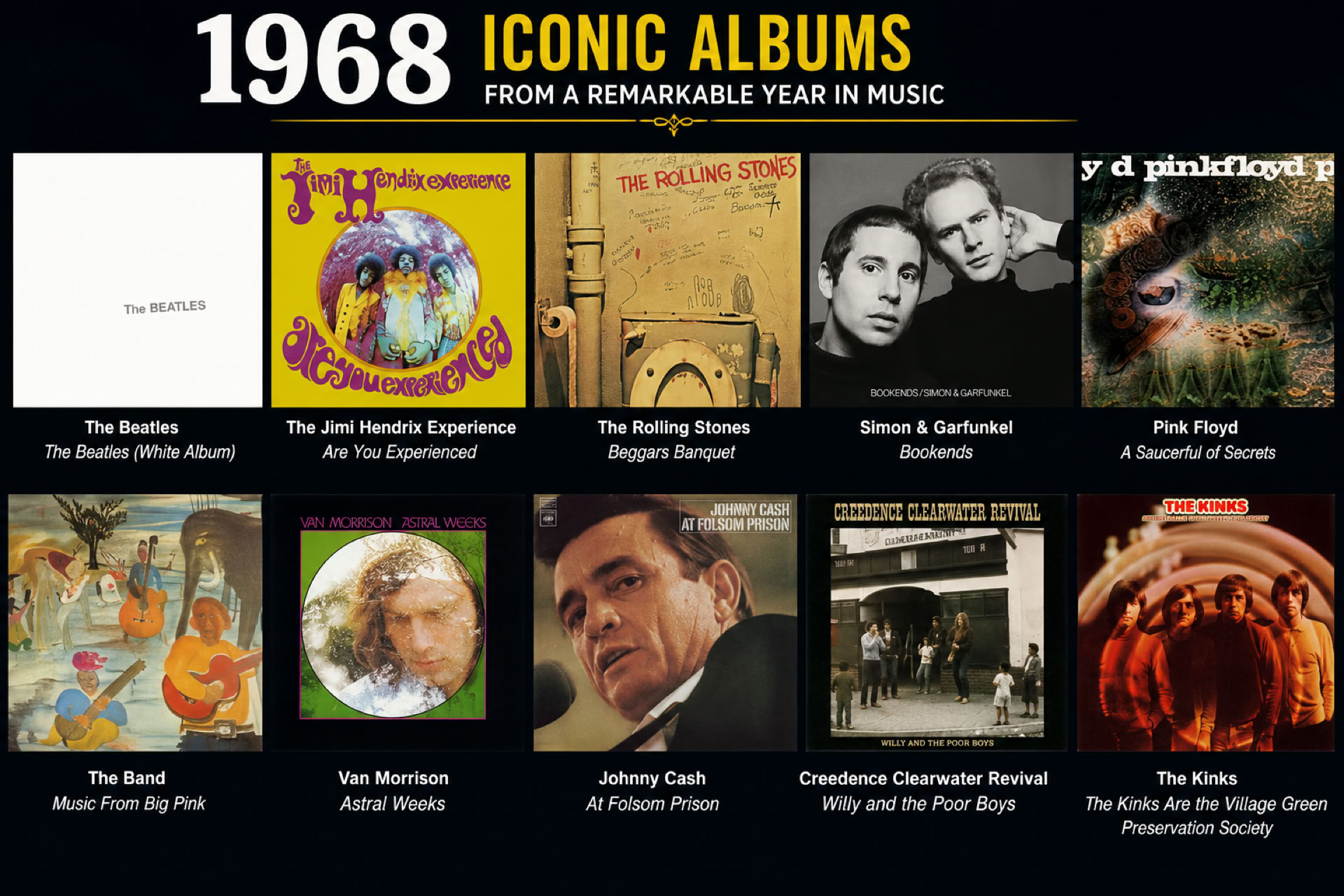
I graduated from high school in 1968 and headed off to university for four years. I didn't know it at the time, but I was also graduating into one of the most extraordinary periods in the history of popular music.
These weren't "oldies." They weren't "classic rock." They were new records. The Beatles released “Hey Jude.” The Rolling Stones gave us “Jumpin' Jack Flash.” Hendrix recorded “All Along the Watchtower.” Cream was playing “Sunshine of Your Love.” And a relatively unknown group called The Band released an album called Music from Big Pink.
On that album was a song called “The Weight.” It reached only #63 on the Billboard Hot 100. More than half a century later, I find that almost impossible to believe.
What Was #1 in 1968?
If you want to understand the music of 1968, you might start with the Billboard charts. But you shouldn't stop there. The year certainly produced memorable chart-toppers. The Beatles spent nine weeks at #1 with “Hey Jude.” Otis Redding reached the top with “(Sittin' On) The Dock of the Bay,” Simon & Garfunkel did it with “Mrs. Robinson,” and Marvin Gaye began his seven-week run with “I Heard It Through the Grapevine.”
Those records deserve their place in history. But some of the songs we now regard as classics never reached #1. Steppenwolf's “Born to Be Wild” peaked at #2. The Rolling Stones' “Jumpin' Jack Flash” reached #3. Cream's “Sunshine of Your Love” stopped at #5. Jimi Hendrix's version of “All Along the Watchtower” reached only #20. And then there's The Band.
A #63 Hit That Refused to Disappear
In 1968, The Band released Music from Big Pink, one of those rare albums that didn't merely contain good songs but helped change the direction of popular music. Its most enduring song may be “The Weight.” Surely it must have been a massive hit? Not exactly. “The Weight” peaked at just #63 on the Billboard Hot 100. Think about that for a moment.
More than sixty records were selling better during its peak week, yet decades later “The Weight” remains instantly recognizable. It has been recorded by numerous artists, appeared in films, become a staple of classic-rock radio and is now inseparable from the story of The Band itself.
Meanwhile, several songs that actually reached #1 in 1968 have largely disappeared from everyday listening.
That's not a criticism of those records. It's simply evidence that popularity and longevity are two very different things.
These Songs Weren't Classics Yet
Looking back at 1968 today creates a strange distortion. We already know which records survived. We know The Beatles, The Rolling Stones, Hendrix and The Band became enormously important. But when I left high school for university, none of us had the benefit of knowing how history would judge the music we were hearing.
We weren't listening to classic rock. We were listening to the radio. We were buying records. We were hearing new songs for the first time. And what an extraordinary collection of songs arrived that year:
- Hey Jude — The Beatles
- The Weight — The Band
- Born to Be Wild — Steppenwolf
- Jumpin' Jack Flash — The Rolling Stones
- Sunshine of Your Love — Cream
- White Room — Cream
- Piece of My Heart — Big Brother & the Holding Company
- All Along the Watchtower — The Jimi Hendrix Experience
- Mrs. Robinson — Simon & Garfunkel
- (Sittin' On) The Dock of the Bay — Otis Redding
- I Heard It Through the Grapevine — Marvin Gaye